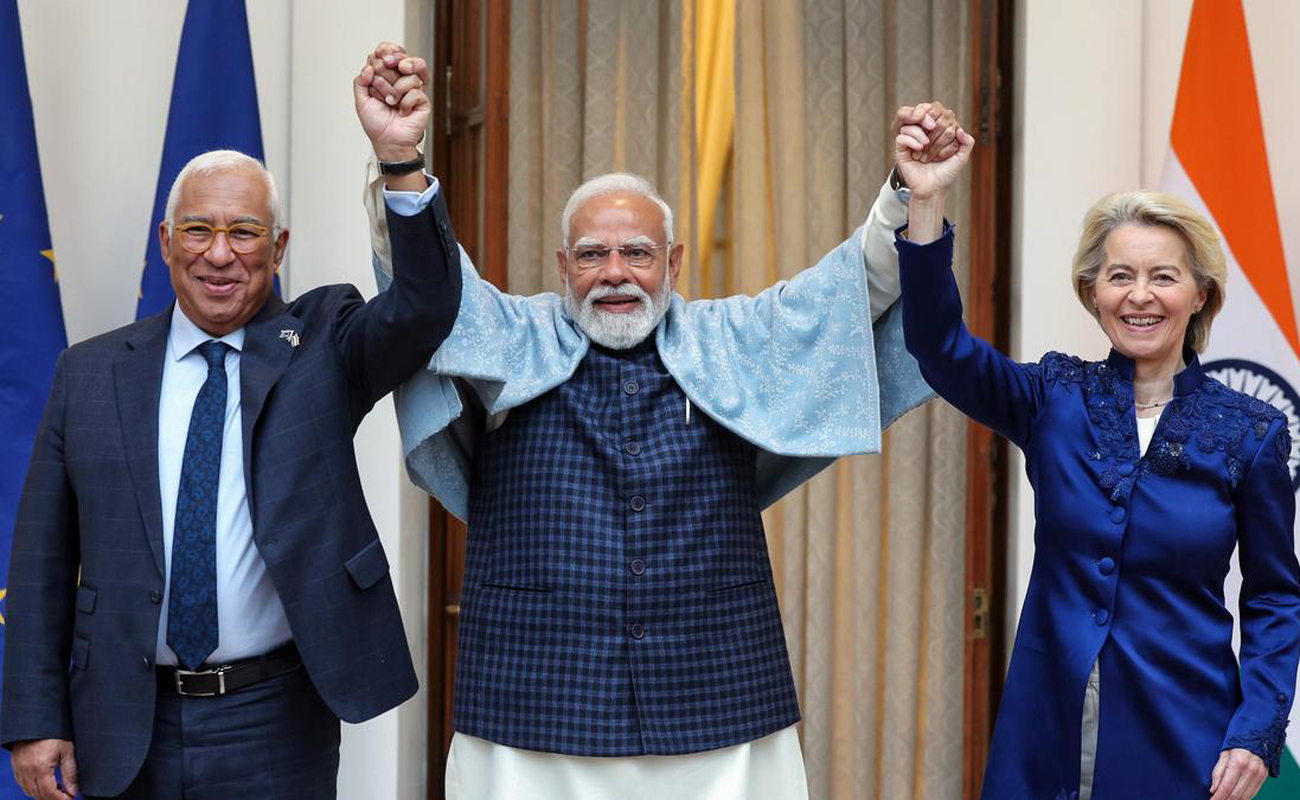
भारत और यूरोपीय संघ (EU) के बीच आज एक ऐतिहासिक मुक्त व्यापार समझौते (Free Trade Agreement – FTA) पर वार्ता सफलतापूर्वक पूरी हो गई। इसे भारत–EU संबंधों की अब तक की सबसे बड़ी और अहम आर्थिक डीलों में से एक माना जा रहा है, जो दोनों पक्षों के आर्थिक सहयोग को नई दिशा देगी।
करीब 18 वर्षों तक चली लंबी बातचीत के बाद इस व्यापक समझौते पर सहमति बनी है। वाणिज्य सचिव राजेश अग्रवाल ने कहा कि यह समझौता संतुलित, भविष्य-उन्मुख और दोनों पक्षों के हितों को ध्यान में रखकर तैयार किया गया है। इसके तहत 90 प्रतिशत से अधिक व्यापारिक क्षेत्रों में शुल्क और अन्य व्यापारिक बाधाओं को कम या समाप्त किया जाएगा।
इस FTA के जरिए भारत को लगभग 2 अरब उपभोक्ताओं वाले विशाल बाजार तक बेहतर पहुंच मिलेगी, जो वैश्विक GDP के करीब एक-चौथाई हिस्से को कवर करता है। समझौते के लागू होने के बाद यूरोपीय कारों पर लगने वाले ऊंचे आयात शुल्क को चरणबद्ध तरीके से कम किया जाएगा, जबकि भारत के कपड़ा, चमड़ा, रसायन, खेल सामान और अन्य श्रम-प्रधान उद्योगों को यूरोपीय बाजार में बड़े अवसर मिलेंगे।
विशेषज्ञों का मानना है कि यह समझौता न केवल व्यापार को बढ़ावा देगा, बल्कि निवेश, रोजगार और तकनीकी सहयोग को भी नई गति प्रदान करेगा।
Follow News on our Facebook Channel : https://www.facebook.com/bnnewsindia
India–EU Trade Deal Marks Historic Milestone as Free Trade Talks Conclude Successfully
India and the European Union (EU) have successfully concluded negotiations on a historic Free Trade Agreement (FTA), marking one of the most significant economic deals between the two sides. The agreement is expected to redefine India–EU economic relations and strengthen long-term cooperation.
After nearly 18 years of prolonged negotiations, both sides have reached a consensus on this comprehensive FTA. Commerce Secretary Rajesh Agrawal stated that the agreement is balanced, future-oriented, and designed to protect the interests of both partners. More than 90 percent of trade sectors will see a reduction or elimination of tariffs and trade barriers.
The FTA will provide India enhanced access to a massive market of nearly 2 billion consumers, covering close to one-quarter of global GDP. Once implemented, high import duties on European cars will be reduced in phases, while Indian sectors such as textiles, leather, chemicals, sports goods, and other labour-intensive industries will gain improved access to European markets.
Experts believe the agreement will not only boost bilateral trade but also accelerate investment, job creation, and technological collaboration between India and the EU.